
From Breadboards to Super Minis: The Evolution of Hobby Microcontrollers
If you have spent any time at the makerspace over the last decade, you have witnessed a silent revolution. What began as simple LED blinks on a bench has evolved into edge-AI processing and vibrant, pocket-sized displays.
The 8-Bit Foundation: Arduino Uno
It actually started a bit before the familiar Arduino Uno (ATmega328P) with the Diecimila and Duemilanove boards. Before Arduino, setting up a microcontroller required dedicated programmers, messy register configurations, and a steep learning curve.
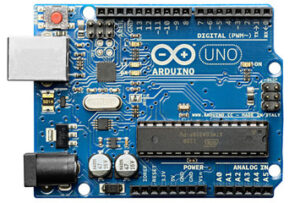 Arduino democratised hardware hacking with an accessible C/C++ IDE and standardised breadboard-friendly shields. However, it had distinct limits: 16 MHz, 2 KB of RAM, and zero native network connectivity. Adding Wi-Fi meant wiring up clunky, expensive external shields. A large variety of shields (PCBs that plug straight in to the headers on the main board) made their way on to the market making it easy for newcomers to get experience with the IDE programming environment and get all manner of sensors working in their projects.
More info on Arduino’s history is here.
The Wireless Shift: ESP8266
Around 2014, the ESP8266 arrived and changed maker culture overnight. Originally intended as a serial-to-Wi-Fi adapter, makers quickly realised this tiny chip from Espressif could be flashed directly via the Arduino IDE.
-
Clock Speed: 80 MHz / 160 MHz
-
RAM: ~80 KB usable
-
Price: ~$3 USD
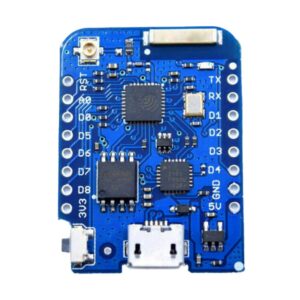
Anyone could now build a web-connected sensor node for the price of a cup of coffee. Its single-core design and the number of GPIOs were limiting, but it kicked off the modern IoT era. A favourite version is the D1 Mini.
Although the microcontroller could be purchased as a module suited to be installed into a wide variety of industrial and appliance designs, for makers it was more usual to grab a development kit board with headers or provision for headers, making it easy to connect to sensors and other devices using Du Pont Jumper wires. 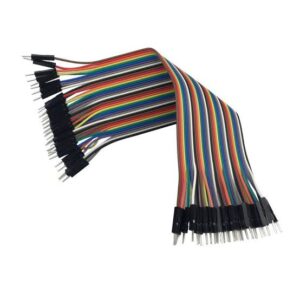
The Workhorse: Original ESP32
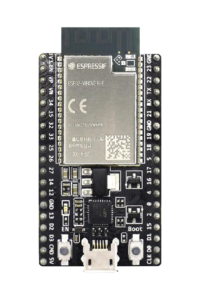
Recognising the ESP8266’s shortcomings, Espressif released the classic ESP32 in 2016. It addressed virtually every maker pain point:
-
Dual-core Xtensa LX6 processors (up to 240 MHz)
-
Integrated Wi-Fi + Bluetooth LE
-
Generous GPIO counts, touch sensing, and hardware cryptographic acceleration
It became the undisputed backbone of DIY smart homes, robotics, and complex maker builds.
Specialisation & The RISC-V Era: ESP32-C6 & S-Series
Instead of a single successor, Espressif diversified its lineup to target specific maker niches:
-
ESP32-C6 (Smart Home Focus): Swapping Xtensa for open-source RISC-V cores, the C6 introduced Wi-Fi 6, Bluetooth 5, and native IEEE 802.15.4 (Thread/Zigbee). It is the ideal chip for building local, low-latency Matter devices.
-
ESP32-S3 (Vector AI & Graphics): Featuring vector instructions for micro-ML/vision tasks, USB OTG, and high-speed PSRAM, the S3 became the go-to choice for advanced user interfaces and camera projects.
The Latest Frontiers: ESP32-P4 & Super Minis
   [Arduino Uno]       ->       [ESP8266]       ->       [ESP32 Classic]
 16 MHz / 8-bit / No WiFi   160 MHz / WiFi / $3     Dual-Core / BT / Massive GPIO
                                                                |
                                              +-----------------+-----------------+
                                              |                                   |
                                      [ESP32-C6 / S3]                      [ESP32-P4]
                                Thread / Zigbee / AI Vector           400 MHz Dual RISC-V
                                              |                         MIPI HMI / No Radio
                                              v
                                 [ESP32-S3 Super Mini + TFT]
                                Compact All-in-One Form Factor
The Powerhouse: ESP32-P4
The ESP32-P4 seems like a bold move. It drops native wireless radios entirely to focus on raw computing power. Boasting a dual-core 400 MHz RISC-V CPU, MIPI-DSI display interface, MIPI-CSI camera support, and hardware H.264 video encoding, it bridges the gap between traditional microcontrollers and single-board computers like the Raspberry Pi. That’s serious grunt.
The Desktop Companion: ESP32-S3 Super Mini with TFT
On the opposite end of the spectrum is the ESP32-S3 Super Mini with integrated TFT display.
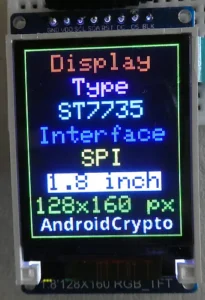 Combining the dual-core muscle of the S3 into a postage-stamp-sized footprint, these boards feature a vibrant onboard 1.14″ IPS display. Instead of spending hours wiring external screen breakouts, you get a drop-in display node with Wi-Fi and Bluetooth right out of the box. Does that sound like the right device for your next project?
Grab a Board at the Shop
We’ve come a long way from working with only 2 KB of memory on an 8-bit chip. Whether you are building Thread mesh networks with the C6, designing a media interface with the P4, or coding a desk gadget on a Super Mini TFT, these devices pack impressive capability in small packages. Drop by our makerspace this weekend to try out the new ESP32 family on your next project and share the fun with other members!